
72 percent of multi-day blisters form on days 3 and 4, when feet swell 5 to 8 percent and socks stay damp. We see the pattern every season on the West Highland and Great Glen routes. Fiona MacLeod in our studio sets a boot, sock and tape routine that holds for 6 to 8 walking days.
8 mm Is the Fit Gap That Prevents Black Toenails
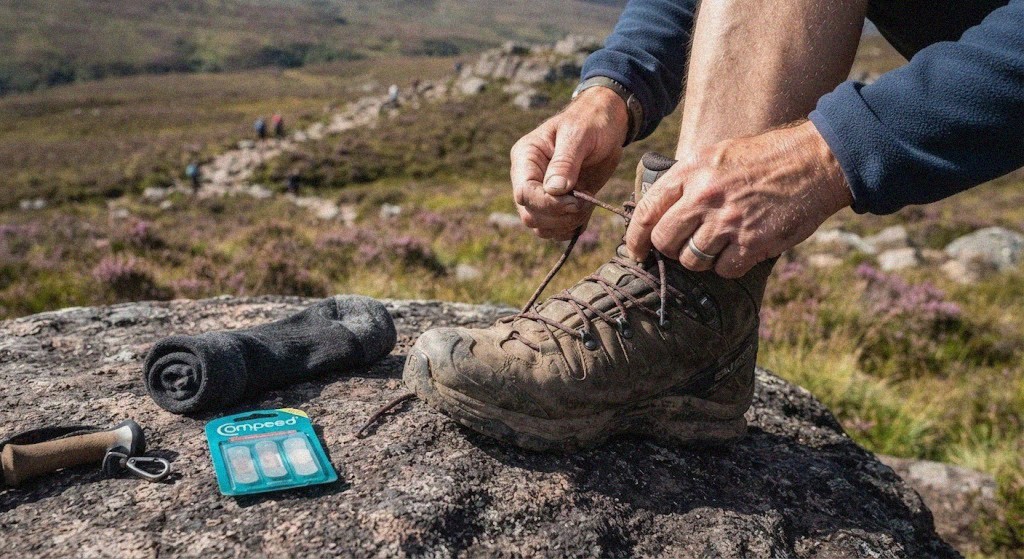
8 to 10 mm of space in front of your longest toe is the downhill-fit target. You test it on a 20-degree shop ramp with a 6 kg pack. Toes that touch on the ramp will bruise by day 3 on real descents.
5 percent is the foot-volume swell to allow at fitting time in the afternoon. You shop after 15:00 when feet are warm. We advise trying 2 sizes and 2 lasts, not one brand in two sizes.
2 Pairs per Day Beats One Expensive Pair
2 pairs of walking socks per day is our standard: one for morning, one after lunch. Merino-nylon blends at 60 to 80 percent merino dry faster than cotton. You rotate and air the morning pair on your pack.
- Liner plus sock: cuts friction for narrow heels
- Double-layer sock: built-in slip plane for wide forefeet
- Single cushioned sock: works when boots fit perfectly
60 ml of foot balm per week is enough for two applications per day. You apply to heels and toe joints before socks. We include a 100 ml tube on the kit list because it also covers chafe points.
3 Lacing Fixes Solve 80 Percent of Heel Slip
3 lacing fixes cover most cases: heel lock, window lacing and forefoot relief. Heel lock uses the top hook twice and cuts lift by 5 mm. Window lacing skips one eyelet over a pressure point.
5 minutes is the time to relearn heel lock before your trip, not on day one. You practise with the socks you will wear. We send a one-page lacing card with every kit list.
40 GBP of Tape Prevents 400 GBP of Ruined Days
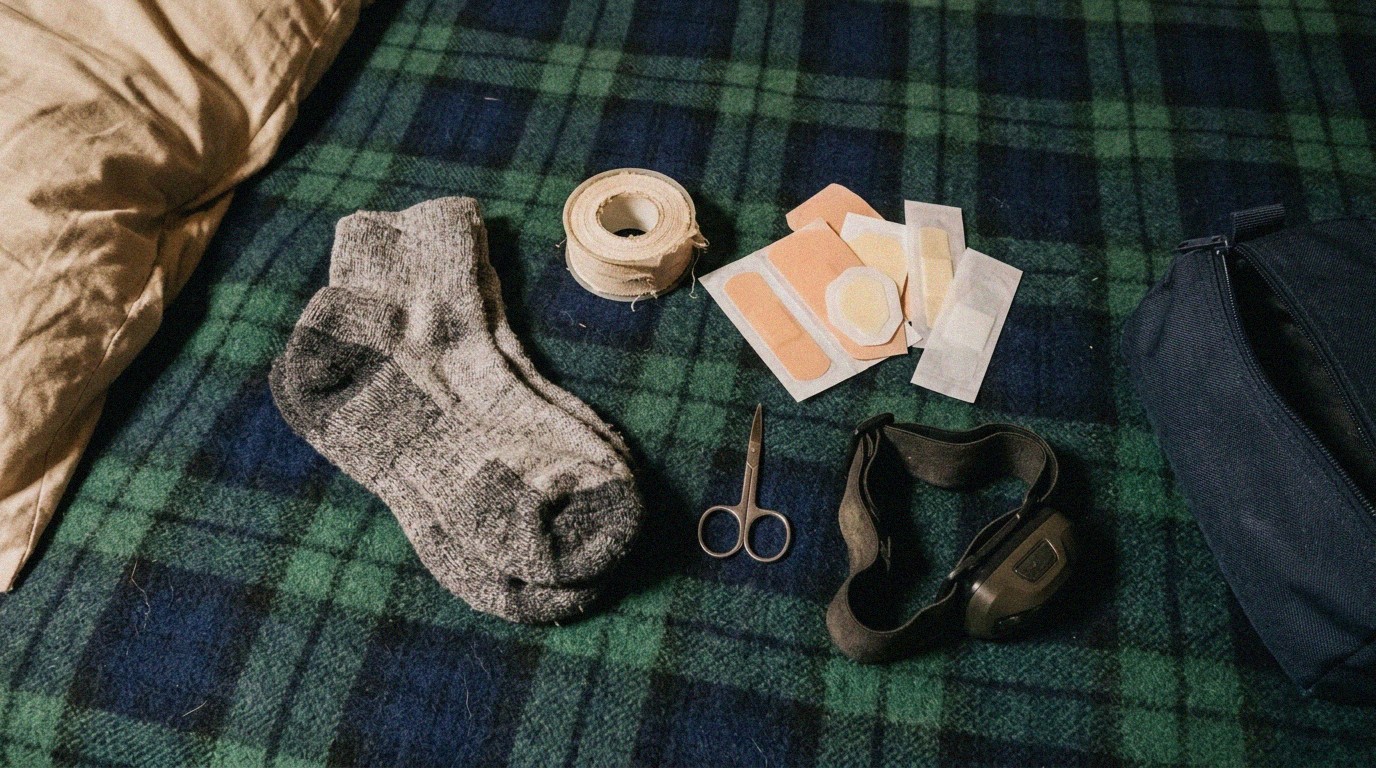
40 GBP buys a season supply of zinc oxide tape, kinesiology tape and 6 alcohol wipes. You tape hot spots at breakfast, not at lunch when the blister has formed. Strips run 8 to 10 cm on heels, 5 cm on toes.
10 cm is the maximum tape length that stays put on a sweaty heel. Longer strips peel at the edges. You round the corners with scissors so socks do not lift them.
6 Weeks Is the Boot Break-In Minimum
6 weeks and 60 miles is the break-in we require before a 70-mile-plus trail. That means 3 walks of 10 miles plus daily wear. Blisters in week 2 of break-in reveal fit problems while shops still accept returns.
2 business days is our time to review your boot and sock shortlist by email. Fiona MacLeod flags the 3 most common fit errors from photos of wear marks. You get a foot-care sheet, a tape plan and a day-4 checkpoint routine.